
Crypto payments for US businesses

Take crypto without touching the price swings

How a payment processor converts a customer's crypto into dollars at checkout, and what that means for your books, your bank account and your refunds.

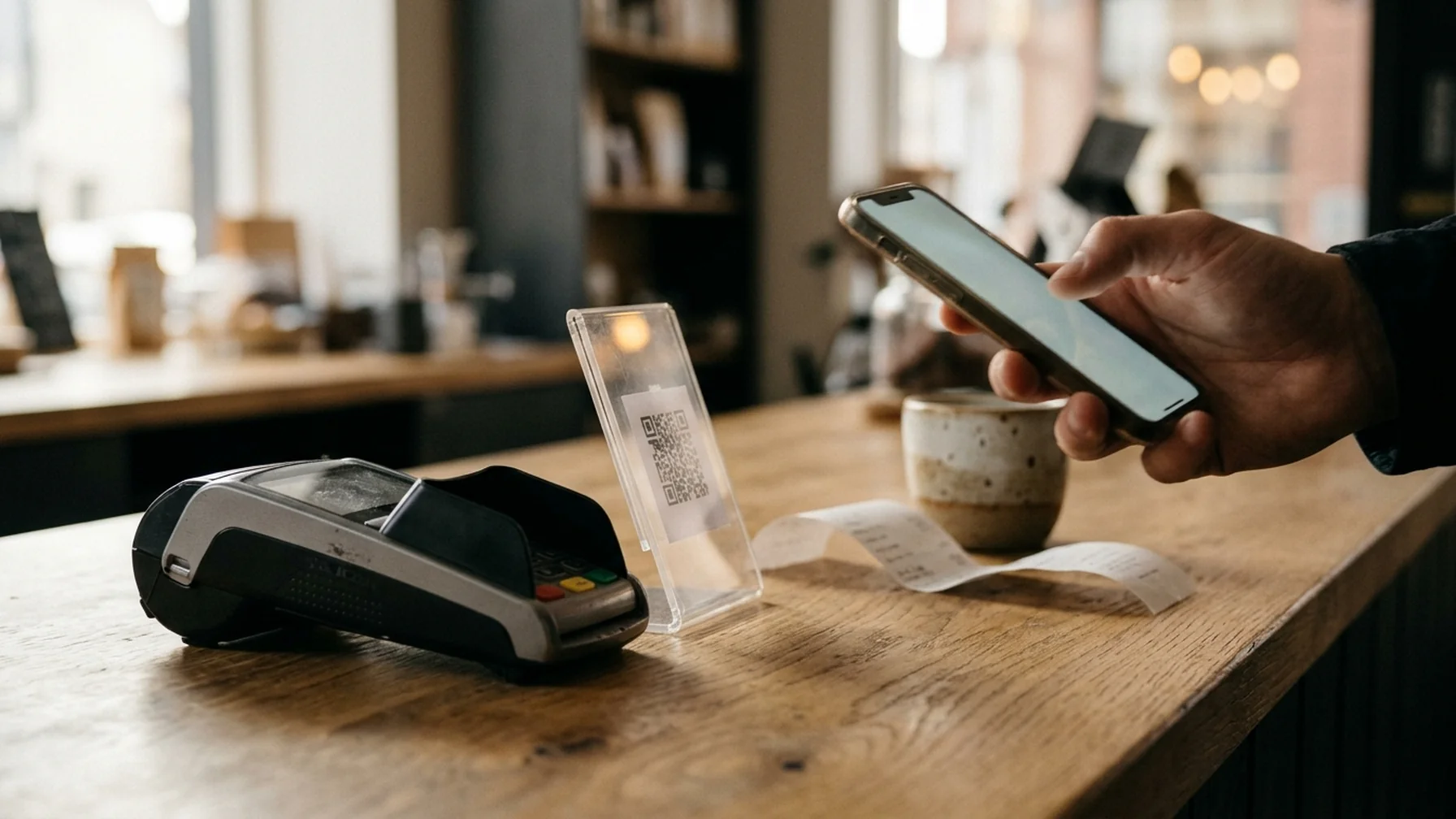
Close-up of a merchant's counter at a small retail shop, a card terminal beside a printed QR code stand, a customer's phone held over the code, afternoon light across the counter surface

What accepting crypto changes for your business

Three practical gains merchants report once crypto payments are wired into their existing checkout and accounting.

01

Settlement that does not wait on banking hours

Card and ACH payouts can sit for days and stall on weekends or holidays. Crypto payments settle on-chain around the clock, so incoming funds can be confirmed and converted on your schedule rather than the bank's. The trade-off is that confirmation times and network fees vary by chain, so choose networks that match your order values.

Crypto payment gateways


Close-up of a merchant's phone on a counter showing a payment confirmed notification, with a card terminal blurred behind it

02

Reach customers who prefer to pay in crypto

Some buyers hold stablecoins or bitcoin and would rather spend them than convert to dollars first. Offering a crypto option at checkout gives those customers a reason to complete the purchase instead of abandoning it. It is an added payment method, not a replacement: keep cards and ACH in place, since most customers still use them.

Customer checkout operations
Customer at a checkout counter holding a phone toward a QR code stand while a cashier watches

03

A treasury you can hold or convert deliberately

Crypto you receive lands in a wallet you control, which means you decide whether to keep it, convert it to dollars, or split incoming payments between the two. That flexibility is also a responsibility: price swings affect what your balance is worth, so set a conversion rule before volume picks up rather than reacting after a drop.

Stablecoins and volatility
Laptop on a desk showing a simple balance chart beside a hardware wallet and a notebook with handwritten figures
A merchant's desk at midday: a laptop showing an invoice, a printed payout schedule beside it, and a phone face-up next to a coffee cup.

Stablecoins and volatility management

Match the settlement model to your cash flow

Three settlement routes, and what each one asks of your treasury before the first invoice is paid.

  • Convert to dollars at checkout, so the balance sheet stays in one currency and the processor carries the price swing.
  • Hold the stablecoin balance and pay suppliers from it, which keeps a dollar peg but adds a counterparty you must vet.
  • Keep part of each payment in the coin itself, which suits businesses that already pay expenses in that asset.
Read the stablecoin settlement articles

Where Crypto Payments Touch Your Books

Three accounting and compliance areas that decide whether crypto checkout saves you money or creates a tax mess.

Desk with an open ledger notebook, a phone showing a QR code, and a printed receipt beside a calculator in daylight

Recording a sale at the right value

A crypto payment is revenue at the moment it is received, valued in USD at that time. The gap between receipt and conversion to dollars is a separate gain or loss, not extra sales. Keeping a timestamped price per transaction is what makes that split possible later.

Browse articles on tax and compliance
Two labeled hardware wallets and a laptop on a plain desk, one wallet set apart from the other

Separating company funds from customer funds

Payments received into a business wallet should not sit in the same wallet you use for spending or testing. A dedicated receiving wallet per store or per currency keeps transaction history readable when a processor, an accountant, or an auditor asks which payment went where.

Wallet and custody setup articles
Printed monthly statement pages fanned out beside a phone showing a chart, on a dark table

Choosing between a processor and direct settlement

A hosted processor converts to dollars and hands you a report; direct wallet settlement keeps the coins but leaves you tracking cost basis yourself. The first trades a fee for simpler bookkeeping, the second trades bookkeeping effort for full control of the asset. Neither is universally cheaper.

Compare payment gateway topics

Start here

Pick a processor before you pick a coin

Settlement speed, refund handling and tax reporting differ sharply between gateways, so the processor decision shapes everything that follows.

Read the gateway articles

Newsletter

Get new crypto payment guides by email

Occasional emails when we publish a new guide on crypto payment gateways, wallet custody or checkout operations. No fixed schedule.

We use your address only to send these emails. Unsubscribe from any message. We do not sell or share addresses.